
AI music certainly has winners, but are most musicians among them?
What's wrong with AI music today?
A major focus in AI music has been generating higher-quality music, faster. That's a valid goal, and there are many ways to achieve it.
One way is to train models on as many high-quality recordings as possible. In terms of speed and quality, this approach has proven very successful.
These AI music systems are creating and capturing a huge amount of value from musicians' life's work. But do they all have systems in place that allow these musicians to share in the value created?
I personally can't justify selling commercial rights to AI-generated music while leaving the musicians whose work helped train the models uncompensated.
What could AI do differently?
AI doesn't have to be built this way. It can be built to be musician-centric.
We envision AI as a medium for musicians to amplify their creativity and extend the reach of their work to uses that would otherwise be uneconomical.
AI can customize musical experiences at a scale no individual musician could economically serve. With the musician's permission, AI could make their creative work available in countless personalized forms that would have been impossible for them to produce individually.
The real opportunity comes when attribution and compensation are properly implemented. At this scale, AI could create new income for musicians rather than simply replacing their existing work.
Why we're building Bovo this way
We started building Bovo because we don't see the industry heading in the direction we'd like to see: toward AI that can carry musicians' work forward at scale and compensate them.
My co-founder Austin Yip has been a professional composer for over two decades and understands the industry deeply. About a year ago, we discussed how AI music could displace paid recording, composing, and arrangement work without creating a new way for those musicians to share in the value generated by AI.
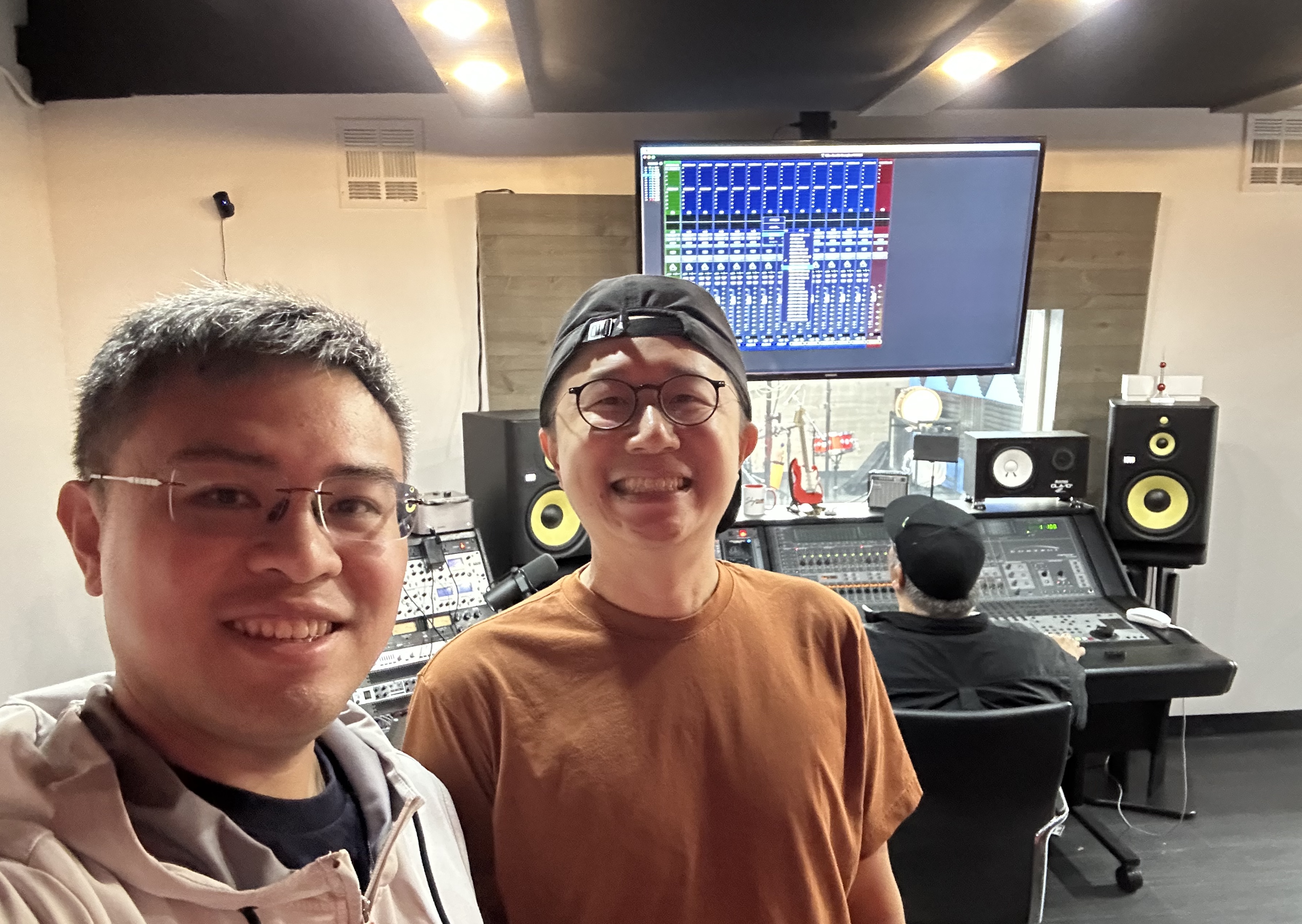
Seeing the creative ways people are using AI music tools also led us to believe that if musicians could participate in this value stream, their work could reach a much larger audience and potentially improve their livelihoods.
We therefore build Bovo around three pillars:
- Permission and compensation: Build on music and performances that we have the rights to use, with compensation for contributors.
- Attribution: Develop technology that tracks musical contributions so compensation can reflect how those contributions create value.
- Amplification: Build applications that extend the reach and usefulness of musicians' work.
To achieve permission, compensation, and attribution, we took a radical approach.
We build and train our music-generation models from scratch.
No pretrained music models licensed only for noncommercial use. No scraping music from the internet.
Instead, we commissioned musicians who share our vision to make recordings, with the proper rights and permissions for use in our system and its outputs.
We've also developed technology to track how musicians' contributions are used in generated music. This lays the foundation for a future where musicians can be fairly compensated for those contributions.
Recording takes time. Annotating recordings takes time. Building attribution into the generation process also took effort, especially to keep the additional processing time reasonable.
But by doing so, we can build and control our training data and music models, and track contributions in ways that make our three pillars possible.
Needless to say, paying musicians costs more than scraping the internet for the same amount of data, but it's money well spent.
The future we believe in
We imagine a future where:
-
An aspiring musician can learn from a maestro's performance through AI that adapts the performance to the learner's skill level over time. Each generated adaptation could result in compensation for the maestro.
-
Musicians can explore ideas and create new pieces based on other musicians' work, with their permission, adapting that work to their needs while compensating the original musicians for each generation.
-
Business operators can customize the music played in their commercial spaces and have it automatically adapt to the time of day, season, and other factors as they see fit. Musical contributions would be accounted for, and musicians would be compensated.
Can musicians be among the winners of AI music? At Bovo, we certainly believe the answer is yes. Seeing musicians' eyes light up when we tell them what we're building gives us confidence that we're moving in the right direction.